
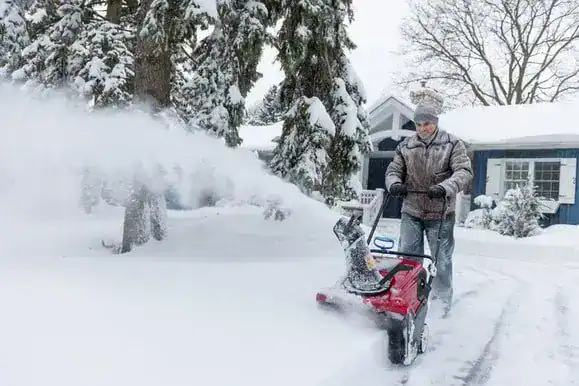
The beauty of Ohio is that we truly get to experience all four seasons—winter, spring, summer, and autumn. From a concrete perspective, though, these different seasons can negatively affect concrete. When it’s too hot, too cold, or when both temperature extremes are felt in one day, the weather can damage your concrete, leaving unsightly cracks and uneven concrete. Here’s how the different seasons can take a toll on your new and existing concrete.
WINTER
You know how brutal Ohio winters can be. Freezing temperatures, snow, and ice can all wreak havoc on your concrete. However, salt can sometimes end up doing the most damage. Concrete is a permeable material, so even though it’s solid and strong, liquids and gases can still pass through it. When salt and other de-icing chemicals are put on concrete, the acidic properties of the salt can seep through the concrete and attack the bonds that hold the concrete together. This causes your concrete to deteriorate faster and cause cracks, voids, and trip hazards.
SPRING
When the frozen ground thaws in the spring, heaving and settling can occur. Heaving is when the ground pushes up on the concrete, causing it to crack. Settling is the opposite. This happens when the soil collapses, typically from tree roots that decayed over the winter. Heaving and settling can cause concrete to crack, which is not only unattractive, but is also dangerous.
SUMMER
While most home projects are completed during the summer months when the weather is nice, hot temperatures are bad for pouring new concrete. Hot temperatures can cause plastic shrinkage, which is when concrete cures too fast. Remember, concrete is made up of cement and water. On a hot summer day, the water can evaporate too quickly and dry out the concrete before it has set. As a result, dried-out concrete cracks more easily, which can cause tripping hazards and damage to your vehicles.
AUTUMN
Going from a humid summer to a crisp fall can also be damaging to your concrete. When temperatures rise in the summer, your concrete will expand. As the weather changes to autumn, the drop in temperature will then cause your concrete to shrink. These shifts in temperature can also cause your concrete to shift as it expands and shrinks. As a result, your concrete can become uneven and/or cracked
REPAIR YOUR CONCRETE YEAR-ROUND
Whether you’re laying new concrete, or repairing existing concrete, Mr. Level offers year-round concrete services. Our polyurethane concrete leveling method offers a fast and cost-effective solution to repair uneven driveways, sidewalks, patios, and more. Call us today to learn more about our services or to request a quote.