
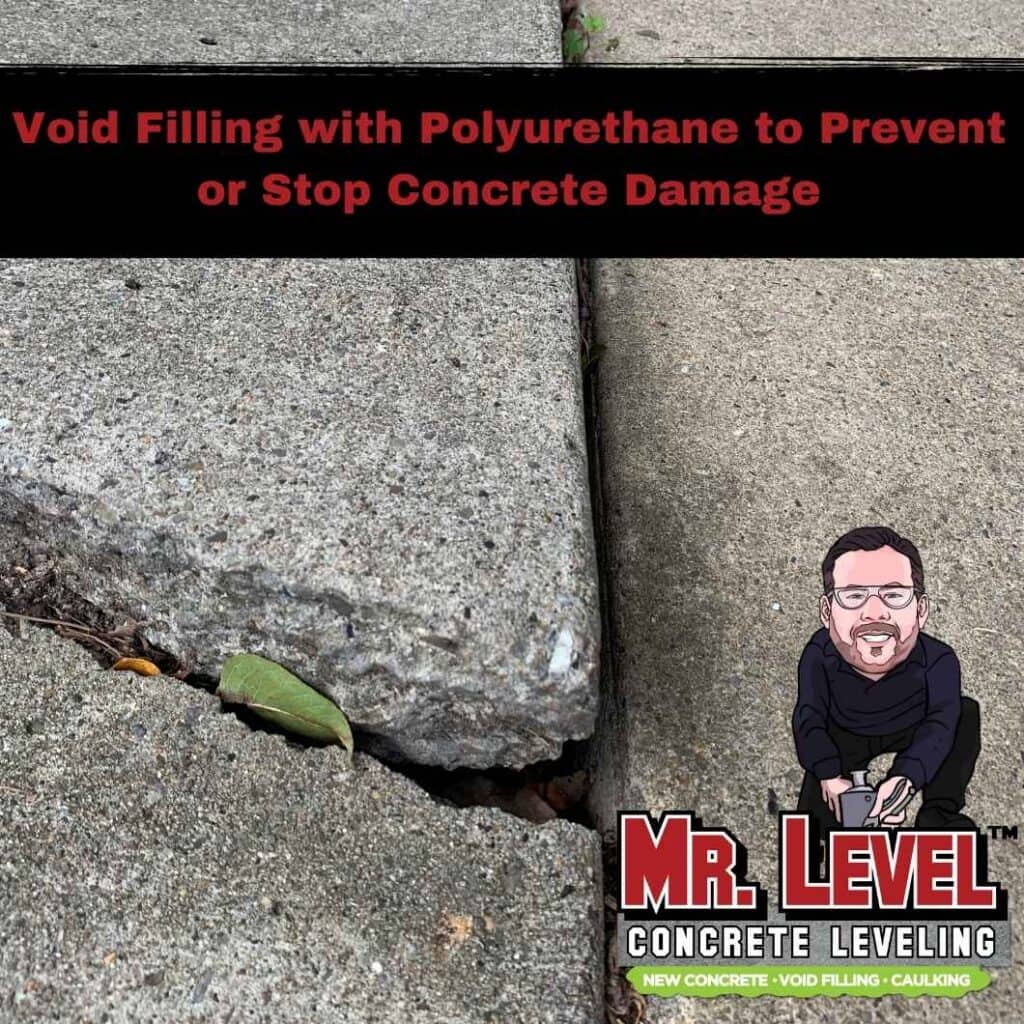
Concrete is a strong and versatile material. While strong, it is susceptible to damage with time. Unfortunately, sometimes concrete experiences soil loss from underneath, which results in the development of voids. These voids allow concrete to sink, crack, and become damaged because the soil that supports the structure is no longer there. In this article, we’ll discuss how void filling with polyurethane beneath concrete can prevent or stop concrete damage.
Signs of Voids Under Concrete
Sometimes, there may not be any indication that there are voids under concrete without some form of geophysics testing. However, in many cases there are signs and symptoms that you can look out for.
- Cracks: Cracks in concrete slabs may be indicative of settlement, which is sometimes caused by voids beneath the surface.
- Visible Soil Loss: In some cases, you may notice soil erosion around the perimeter of the slab. That may also be occurring underneath.
- Uneven Joints: Concrete slabs often come in multiples, like in sidewalks. When aligned next to each other, there are joints between the slabs. These joints may become misaligned, with one slab becoming lower than another. Not only can this be a trip hazard, but it also may point to voids hidden below.
- Hollow Sounds: If the slab sounds hollow when tapped or walked on, it could indicate a loss of soil support underneath.
- Rocking or Movement: Sections of concrete that move slightly when pressure is applied from being stepped on can be a sign that the slab is no longer fully supported.
- Water Pooling: Persistent water pooling on or around the slab may indicate improper drainage which may cause erosion underneath.
- Sudden Drop or Slab Settlement: A noticeable drop in the slab level, especially if it happens suddenly, can be a red flag for large voids.
- Increased Pest Activity: Rodents or burrowing insects may take advantage of open voids beneath slabs, and their presence can be a clue.
How Polyurethane Injection Fills Voids
When voids are detected beneath a concrete slab, polyurethane injection offers a fast, clean, and long-lasting solution. A specialized expanding foam is injected through small holes drilled into the concrete. Once injected, the polyurethane travels into the voids and expands, filling gaps and stabilizing the soil below. This process not only restores support to the slab but can also lift it back into its original position. Unlike traditional methods that require heavy machinery or demolition, polyurethane injection void filling is minimally invasive and cures quickly often within minutes.
Why Mr. Level for Polyurethane Void Filling?
At Mr. Level, we combine top tier materials with expert craftsmanship to ensure your concrete is supported properly and safely. Our team is trained in precision polyurethane injection techniques and uses only high quality foams that are engineered for durability and performance. Whether you’re dealing with sinking driveways, sidewalks, or interior floors, we tailor our approach to meet your specific needs. We don’t just fix the surface, we address the problem beneath it.
A Solid Solution Starts Below the Surface
Voids under concrete may be hidden, but the damage they cause doesn’t stay that way for long. If you’re noticing cracks, shifting slabs, or unusual soil loss, it may be time to take action. Mr. Level is here to restore stability, safety, and confidence to your property with expert-level precision and care. Contact us today to schedule your inspection and let us help you get back on solid ground